Aircraft parts at KPTK
Aircraft Parts for Piston, Turboprop, and Citation Fleets
Michigan Aviation is more than a parts supplier. We are parts problem solvers. We work to understand the issue behind the request and deliver a dependable solution. We keep an extensive inventory on hand, and if we do not have your part, we will get it for you.
Send a parts request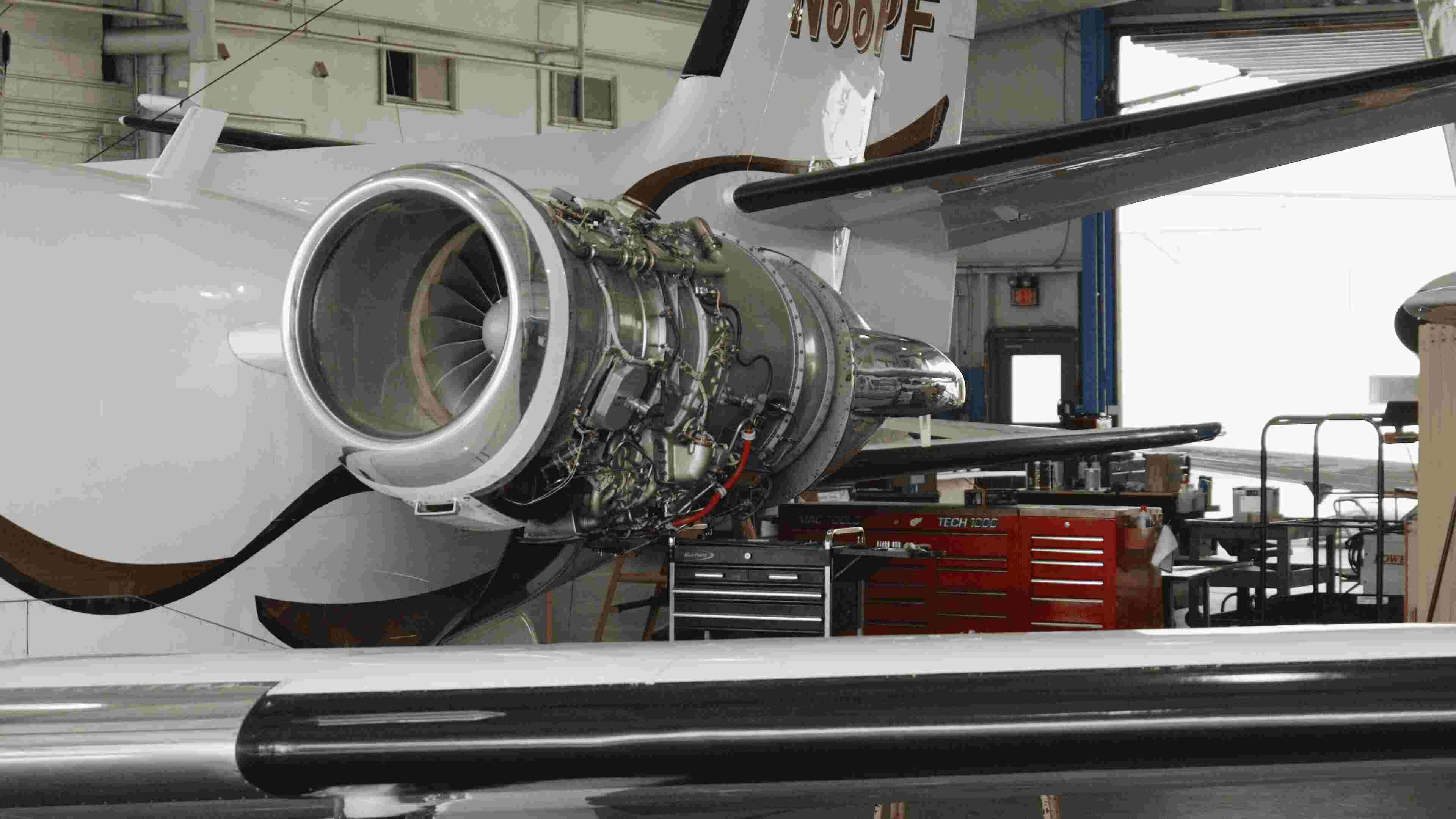
Quick facts
- Location
- Oakland County International Airport (KPTK), Waterford, Michigan
- Repair station
- FAA Part 145 repair station KL2R956K
- Inventory
- On-site inventory including airframe and engine rotables
- Exchanges
- Core exchanges coordinated with traceability paperwork
We either have the part, or we will get it for you
Since 1957, our MRO has inspected and repaired turbine and piston aircraft, and that experience is built into how we handle parts. Our product line specialists look past the part number to the maintenance task you are actually trying to complete. Often that means identifying a subcomponent, an alternate part, or a different way to close out the work, minimizing both cost and downtime.
We carry an extensive on-site inventory, including high-value airframe and engine rotables that arrive with current documentation and are ready for installation. And when a part is not on our shelf, decades of strong relationships with OEMs and vendors let us locate it and ship wherever and whenever you need it.
How do exchanges and rotables work?
Rotables come off the shelf with current documentation, and failed units are handled as exchanges rather than outright purchases where an exchange program applies.
- 1
Confirm the part number and fault
We work from the aircraft and the maintenance task, not just the part number on the request, so the unit coming off is the one actually causing the problem.
- 2
Arrange the exchange unit and paperwork
Once the part is identified we coordinate the exchange unit along with the traceability paperwork that has to travel with it.
- 3
Install and return to service
The exchange unit is installed and the aircraft is returned to service with the maintenance records the work requires.
- 4
Return the core
Exchange programs expect the removed unit back. We handle the core return so the exchange closes out cleanly.
Timing depends on the unit and on availability. We confirm it with you once the part is identified, rather than quoting a turnaround before we know what is needed.
What documentation comes with a part?
Parts are supplied with traceability paperwork, including FAA Form 8130-3 where applicable. Which document applies depends on the part, its origin and its condition, so ask what will accompany a specific part before ordering.
If you are evaluating a part from elsewhere, see how to verify used aircraft parts are airworthy, and the FAA's Suspected Unapproved Parts program for guidance and unapproved-parts notifications.
Which parts are requested most by aircraft type?
Each category below reflects the components we are asked about most often. Use these as a starting point, and reach out with the specific part you are trying to source.
Single-Engine Piston Parts
Single-engine piston aircraft tend to generate steady, predictable parts demand, much of it driven by routine inspections and ordinary wear. These are among the most commonly replaced parts on aircraft such as the Cessna 172 and 182, Piper PA-28, and similar legacy piston singles that make up a large share of the active fleet.
Representative parts
- Brakes, brake pads, and linings
- Wheels and tires
- Spark plugs
- Batteries
- Magnetos
- Vacuum pumps
- Alternators and starters
- Fuel valves, fuel filters, strainers, and fuel lines
- Landing gear struts, fairings, and seals
- Windows, windshields, and related seals
If you are tracking down a recurring replacement item or a harder-to-find piece for a piston single, reach out and we can help you work through the request.
Twin-Engine Piston Parts
Twin-engine piston aircraft often create higher parts demand than singles because they carry two engines, more complex systems, and retractable landing gear. Owners and operators of aircraft in families such as the Beechcraft Baron, Cessna 310 and 340, Piper Seneca and Aztec, and Diamond DA42 and DA62 tend to plan around a broader mix of recurring components.
Representative parts
- Brakes, brake pads, linings, wheels, and tires
- Spark plugs and ignition components
- Magnetos and related ignition hardware
- Batteries
- Landing gear struts, seals, actuators, linkages, and bearings
- Fuel pumps, filters, valves, selectors, and fuel lines
- Propeller governors, hubs, and blades
- Propeller de-ice components if equipped
- Engine accessories such as alternators, starters, vacuum pumps, and engine mounts
When a twin needs parts across two engines or its gear and fuel systems, let us know what you are after and we will help coordinate the sourcing.
Turboprop Parts
Turboprop owners and operators frequently need high-wear and system-critical parts that have a direct effect on departure readiness and routine maintenance planning. Because these aircraft fly demanding schedules, having a reliable point of contact for the right component matters when an inspection or squawk drives a replacement.
Representative parts
- Starter-generators
- Fuel pumps
- Brakes, wheels, and tires
- Engine cowlings
- Exhaust stacks and related exhaust components
- Pneumatic de-ice boots
- Linear and rotary actuators
- Avionics displays
- ITT probes and fuel sensors
- Engine igniters and spark plugs
- Cabin pressurization parts
- Environmental system parts, valves, vents, and seals
- Propeller blades and hubs
If a turboprop is waiting on a system-critical part, contact us with the details and we will help you move it forward.
Cessna Citation Parts
Citation operators often look for replacement parts tied to recurring maintenance, wear, safety compliance, and departure reliability. The breadth of systems on these jets means parts requests can range from routine tires and seals to safety and pressurization components that need to be sourced without disrupting the flight schedule.
Representative parts
- Aircraft batteries
- Main tires and nose tires
- Brake assemblies and brake linings
- Flight control actuators and trim tab actuators
- Flap motors and speed brake actuators
- Fuel pumps and fuel quantity sensors
- O-rings and related fuel-system seals
- Pressurization seals and door seals
- Oxygen masks, cylinders, and regulators
- Pitot tubes, Total Air Temperature probes, and angle-of-attack sensors
- Exterior lights, retractable landing lights, strobe power supplies, and LED tail assemblies
- Emergency exit components, fire suppression bottles, and first aid kit replacement items
For Citation operators managing recurring maintenance or a safety-related replacement, send us your part request and we will help with the sourcing.
Parts problem solvers, not just a parts counter
Our parts business has been fortified by decades of supporting repairs and inspections for our FAA-certified maintenance customers, along with OEM hourly cost maintenance programs such as Williams Engine and Cessna Citation. That foundation means our product line specialists are not simply buying and selling parts. They go beyond it.
Our specialists lean on our technicians and maintenance tracking intelligence to take a wider view of subcomponents, alternate parts, and other ways to complete a job. The goal is always to minimize cost, shorten time to return to service, and get you flying.
With avionics, FBO services, and hangar space all on site at Oakland County International Airport, we support you from inception to completion, not just the aircraft.
What we bring to a parts request
- Extensive on-site inventory, including high-value airframe and engine rotables
- Strong, multi-decade OEM and vendor relationships to source anything we do not stock
- Core exchanges coordinated with the paperwork the exchange program expects
- Subcomponent and alternate-part options to minimize cost and downtime
- A consultative approach to parts replacement, included in your relationship with MAV
How do I send a parts request?
Tell us what you are trying to source or replace and our maintenance team will help you work through it. Send the aircraft make, model and serial number, the part number if you have it, and the maintenance task behind the request. Call (248) 666-3440 or email fly@michiganaviation.com.
What else should I know?
Can you source a part you do not have on the shelf?
Yes. When a part is not in our on-site inventory, we use long-standing OEM and vendor relationships to locate it and ship it where you need it. Tell us the aircraft, the part number and the maintenance task, and we will confirm availability before you commit to a schedule.
How does a core exchange work?
We confirm the part number and the fault, arrange the exchange unit along with its traceability paperwork, install it and return the aircraft to service, then handle the core return so the exchange closes out cleanly. Timing depends on the specific unit and its availability.
What paperwork comes with a part?
Parts are supplied with traceability paperwork, including FAA Form 8130-3 where applicable. Which document applies depends on the part, its origin and its condition, so ask what will accompany a specific part before you order it.
Which aircraft do you stock parts for?
Our on-site inventory is built around the piston, turboprop and Cessna Citation aircraft we maintain at KPTK, including high-value airframe and engine rotables. If you fly something else, send the request anyway and we will tell you what we can source.
For sourcing support and the replacement patterns specific to each aircraft category, see commonly replaced parts across piston, turboprop and Citation aircraft, the Cessna Citation parts replacement guide and the turboprop parts replacement guide.
For sourcing support and for proving a used part is airworthy before it goes on an aircraft, see how to verify a used part is airworthy.
Last updated: